Your personal data is being collected every day—even when you don’t realize it.
Artificial intelligence is making decisions that affect jobs, education, healthcare, and finance.
The question is no longer whether technology impacts our lives. The question is whether it is doing so ethically.
Introduction
Information and Communication Technology (ICT) has transformed the modern world. From smartphones and cloud computing to artificial intelligence and social media, digital technologies have become deeply embedded in everyday life. They have improved communication, increased productivity, expanded access to information, and created new economic opportunities.
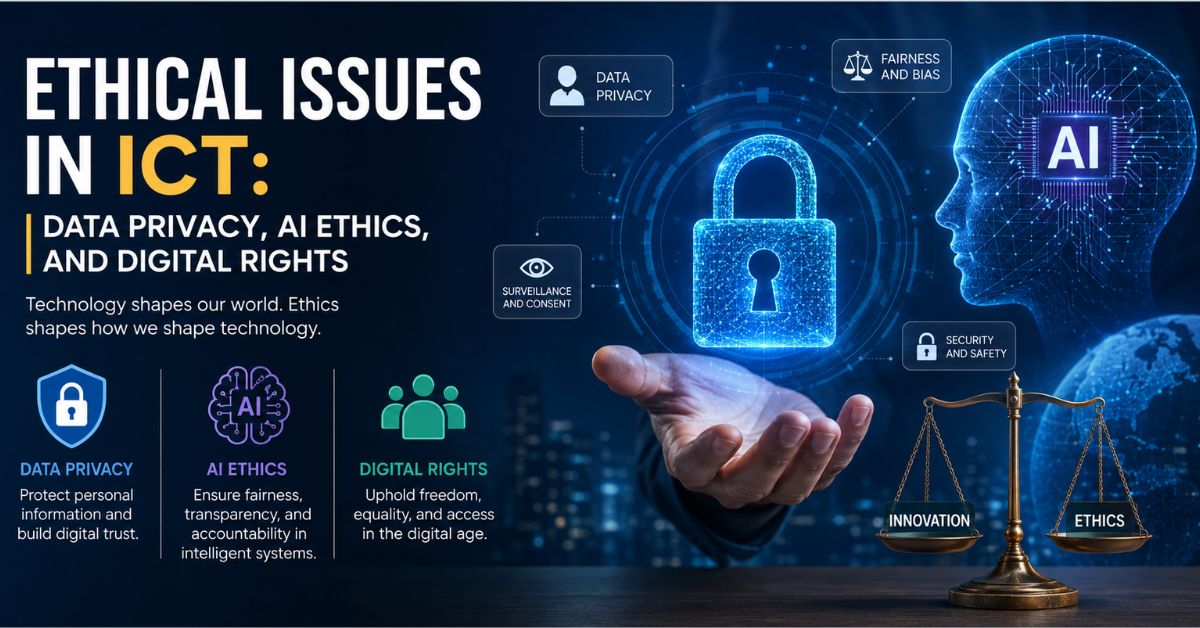
However, the rapid growth of technology has also introduced serious ethical concerns. Questions about data privacy, artificial intelligence, surveillance, online freedom, and digital rights have become central to discussions about the future of technology.
As organizations collect massive amounts of personal information and AI systems become more powerful, individuals are increasingly concerned about how their data is used and whether their rights are being protected. Governments, businesses, educators, and technology companies face growing pressure to ensure that innovation does not come at the expense of ethics.
This article explores the most important ethical issues in ICT, focusing on data privacy, AI ethics, and digital rights. It also examines the responsibilities of organizations and individuals in building a more ethical digital society.
Related post: Cybersecurity in the Digital Age: How to Protect Your Data Online
Understanding Ethics in ICT
Ethics refers to the moral principles that guide human behavior and decision-making. In ICT, ethics involves determining how technology should be designed, developed, deployed, and used in ways that respect human values and rights.
ICT ethics addresses questions such as:
- How should personal data be collected and used?
- Should AI systems make decisions about people’s lives?
- Who owns digital information?
- How can online freedom be protected?
- What responsibilities do technology companies have toward users?
Ethical ICT practices aim to ensure fairness, transparency, accountability, privacy, and respect for human dignity.
Why Ethical Issues in ICT Matter
Technology has become one of the most powerful forces shaping society. Decisions made by technology companies and governments can affect billions of people.
Ethical failures in ICT can lead to:
- Privacy violations
- Identity theft
- Discrimination
- Manipulation
- Social inequality
- Loss of freedom
- Security breaches
- Misinformation
The consequences are often far-reaching and can impact individuals, communities, and entire nations.
As technology continues to evolve, ethical considerations must become an essential part of digital innovation.
Data Privacy: The Foundation of Digital Trust
What Is Data Privacy?
Data privacy refers to an individual’s right to control how their personal information is collected, stored, used, and shared.
Personal data may include:
- Names
- Addresses
- Email addresses
- Phone numbers
- Financial records
- Health information
- Location data
- Online browsing history
- Biometric information
In the digital age, data has become one of the most valuable assets in the world.
Why Data Privacy Matters
Privacy is a fundamental human right.
When personal information is collected without consent or used irresponsibly, individuals may lose control over their identities and personal lives.
Strong data privacy protections help:
- Build trust between users and organizations
- Prevent identity theft
- Protect personal freedom
- Reduce risks of fraud
- Safeguard sensitive information
Without privacy protections, people may become vulnerable to exploitation and surveillance.
The Rise of Big Data
Organizations collect enormous volumes of data every day.
This data comes from:
- Websites
- Mobile applications
- Social media platforms
- Smart devices
- Online purchases
- Search engines
Big Data allows organizations to understand consumer behavior and improve services. However, it also raises concerns about how much information companies should collect and how they should use it.
Common Data Privacy Concerns
Excessive Data Collection
Many organizations collect more information than necessary.
Users often provide personal data without fully understanding how it will be used.
Lack of Transparency
Privacy policies are frequently long, complex, and difficult to understand.
As a result, users may unknowingly agree to practices they would otherwise reject.
Data Breaches
Cybercriminals regularly target organizations that store sensitive information.
Data breaches can expose millions of records and result in:
- Financial losses
- Identity theft
- Reputational damage
Unauthorized Data Sharing
Some organizations share user information with third parties for advertising or business purposes without clear consent.
This raises significant ethical concerns about user autonomy and informed choice.
Consent and Ethical Data Collection
Consent is a cornerstone of ethical data practices.
Users should:
- Know what data is being collected
- Understand why it is being collected
- Have the option to refuse
- Be able to withdraw consent
Ethical organizations prioritize transparency and user control over personal information.
Artificial Intelligence Ethics
What Is AI Ethics?
AI ethics refers to the principles and standards that guide the responsible development and use of artificial intelligence.
AI systems are increasingly being used to:
- Screen job applicants
- Approve loans
- Diagnose diseases
- Recommend content
- Monitor behavior
- Make business decisions
Because AI influences important aspects of life, ethical oversight is essential.
Why AI Ethics Matters
Artificial intelligence can improve efficiency and solve complex problems. However, AI systems can also create unintended harm.
Ethical AI seeks to ensure that technology:
- Is fair
- Respects privacy
- Avoids discrimination
- Remains transparent
- Protects human rights
Without proper safeguards, AI can reinforce biases and increase social inequalities.
Algorithmic Bias
One of the biggest ethical concerns in AI is algorithmic bias.
AI systems learn from historical data. If that data contains bias, the AI may reproduce or amplify it.
Examples include:
- Hiring systems favoring certain groups
- Loan approval algorithms discriminating against minorities
- Facial recognition systems performing poorly on certain populations
Bias can lead to unfair outcomes and limit opportunities for affected individuals.
Transparency and Explainability
Many AI systems operate as “black boxes.”
Users may not understand:
- How decisions are made
- What factors influenced outcomes
- Why certain recommendations were generated
Ethical AI should be explainable and understandable.
People affected by AI decisions deserve clear explanations.
Accountability in AI
When AI systems make mistakes, who is responsible?
Possible parties include:
- Developers
- Companies
- Data providers
- Organizations using the technology
Establishing accountability is essential for maintaining public trust and ensuring ethical use.
AI and Privacy
AI systems often require large amounts of data to function effectively.
This creates privacy challenges because:
- More data collection increases risks
- Sensitive information may be exposed
- User behavior can be extensively monitored
Organizations must balance innovation with privacy protection.
Autonomous Decision-Making
As AI becomes more advanced, it increasingly makes decisions without direct human involvement.
This raises ethical questions such as:
- Should AI decide who receives medical treatment?
- Should AI determine prison sentencing?
- Should autonomous vehicles make life-and-death decisions?
Human oversight remains critical in high-stakes situations.
Deepfakes and Misinformation
AI-generated content has created new ethical challenges.
Deepfake technology can produce realistic videos, audio recordings, and images that appear authentic but are entirely fabricated.
Potential risks include:
- Political manipulation
- Fraud
- Reputation damage
- Disinformation campaigns
Addressing these risks requires ethical standards and technological safeguards.
Digital Rights in the Modern World
What Are Digital Rights?
Digital rights are human rights that apply in online and digital environments.
They protect individuals’ ability to:
- Access information
- Express opinions
- Maintain privacy
- Participate online safely
- Control personal data
Digital rights are becoming increasingly important as more aspects of life move online.
The Right to Privacy
Privacy remains one of the most fundamental digital rights.
Individuals should have the ability to:
- Control their personal information
- Decide who can access their data
- Protect themselves from unnecessary surveillance
Respecting privacy helps preserve personal freedom and autonomy.
Freedom of Expression Online
The internet has created unprecedented opportunities for communication.
People can:
- Share ideas
- Engage in debates
- Access diverse viewpoints
- Participate in public discussions
However, ethical challenges arise when balancing free speech with concerns about:
- Hate speech
- Harassment
- Misinformation
- Harmful content
Finding the right balance remains a major challenge.
The Right to Internet Access
Access to the internet is increasingly viewed as essential for:
- Education
- Employment
- Healthcare
- Civic participation
Digital inequality can limit opportunities and widen social gaps.
Efforts to expand internet access support digital inclusion and equal opportunity.
Digital Surveillance
Governments and organizations often use surveillance technologies to monitor activities.
While surveillance may improve security, excessive monitoring can threaten:
- Privacy
- Freedom of expression
- Civil liberties
Ethical surveillance practices require transparency, necessity, and accountability.
Ownership of Digital Data
Who owns personal data?
This question has become increasingly important.
Many users generate valuable data through:
- Social media activity
- Online shopping
- Mobile applications
- Smart devices
Ethical debates continue regarding whether individuals should receive greater control and ownership rights over their digital information.
Ethical Responsibilities of Technology Companies
Technology companies play a central role in shaping the digital environment.
They have ethical responsibilities that extend beyond legal compliance.
Building Privacy by Design
Privacy should be integrated into systems from the beginning rather than added later.
Privacy-by-design principles include:
- Data minimization
- Secure storage
- User control
- Transparency
Ensuring Fair AI Systems
Organizations should regularly audit AI systems to identify:
- Bias
- Discrimination
- Unfair outcomes
Continuous monitoring helps ensure responsible deployment.
Protecting User Data
Companies must implement strong security measures such as:
- Encryption
- Multi-factor authentication
- Access controls
- Regular security testing
Protecting user information is both a legal and ethical obligation.
Promoting Transparency
Users deserve clear explanations regarding:
- Data collection practices
- AI decision-making
- Terms of service
- Privacy policies
Transparency builds trust and accountability.
The Role of Governments and Regulators
Governments have a responsibility to establish frameworks that protect citizens in digital environments.
Key areas of regulation include:
- Data protection laws
- AI governance
- Consumer protection
- Cybersecurity standards
- Digital rights enforcement
Effective regulation encourages innovation while protecting public interests.
Ethical Challenges Emerging in the Future
Technology continues to evolve rapidly.
Several emerging technologies present new ethical concerns.
Artificial General Intelligence
Future AI systems may become significantly more capable than current models.
Questions about control, accountability, and safety will become increasingly important.
Biometric Technologies
Facial recognition and biometric systems raise concerns about:
- Surveillance
- Consent
- Misuse of personal information
Brain-Computer Interfaces
Emerging technologies that connect the human brain with computers may introduce unprecedented privacy and ethical issues.
Virtual and Augmented Reality
As immersive technologies become more common, protecting user privacy and preventing manipulation will be critical.
How Individuals Can Protect Their Digital Rights
While governments and companies have important responsibilities, individuals also play a role.
Practical steps include:
Understand Privacy Policies
Review how organizations collect and use your information.
Use Strong Security Practices
Protect accounts with:
- Strong passwords
- Multi-factor authentication
- Regular updates
Be Selective About Sharing Information
Avoid providing unnecessary personal details online.
Stay Informed
Technology evolves quickly.
Keeping up with digital rights and privacy issues helps individuals make informed decisions.
Support Ethical Technology
Choose services and platforms that prioritize privacy, transparency, and responsible innovation.
Building an Ethical Digital Future
Creating an ethical digital future requires collaboration among:
- Governments
- Businesses
- Educators
- Researchers
- Technology developers
- Consumers
Ethics should not be viewed as an obstacle to innovation.
Instead, ethical principles help ensure that technological progress benefits society while protecting human rights.
Organizations that prioritize ethics often earn greater trust, stronger reputations, and long-term success.
Conclusion
Ethical issues in ICT have become some of the most important challenges of the digital age. As technology becomes increasingly integrated into everyday life, concerns about data privacy, AI ethics, and digital rights continue to grow.
Personal information is now a valuable resource, artificial intelligence influences critical decisions, and digital platforms shape how people communicate and access information. These developments create enormous opportunities, but they also demand responsibility.
Protecting privacy, ensuring fair and transparent AI systems, and safeguarding digital rights are essential for building trust in technology. Governments, organizations, and individuals all have a role to play in creating a digital environment that respects human dignity, promotes fairness, and protects fundamental freedoms.
The future of technology should not be measured only by innovation. It should also be measured by how well it serves people, respects rights, and upholds ethical principles in an increasingly connected world.
Frequently Asked Questions (FAQs)
What are ethical issues in ICT?
Ethical issues in ICT are concerns related to the responsible use of technology, including privacy, security, fairness, transparency, digital rights, and accountability.
Why is data privacy important?
Data privacy protects individuals from unauthorized access, misuse of personal information, identity theft, and loss of control over sensitive data.
What is AI ethics?
AI ethics refers to principles that guide the responsible design, development, and use of artificial intelligence to ensure fairness, transparency, accountability, and respect for human rights.
What are digital rights?
Digital rights are human rights that apply in digital environments, including privacy, freedom of expression, internet access, and control over personal data.
How can AI become biased?
AI can become biased when it is trained on incomplete, inaccurate, or discriminatory data, leading to unfair outcomes and decisions.
What is digital surveillance?
Digital surveillance involves monitoring online activities, communications, or behavior through technology. Ethical concerns arise when surveillance becomes excessive or lacks transparency.
How can individuals protect their privacy online?
Individuals can protect their privacy by using strong passwords, enabling multi-factor authentication, reviewing privacy settings, limiting data sharing, and staying informed about digital risks.
Why are digital rights important?
Digital rights help ensure that people can safely participate in the digital world while maintaining privacy, freedom, and equal access to information and opportunities.
What role do technology companies play in ICT ethics?
Technology companies are responsible for protecting user data, designing ethical AI systems, promoting transparency, and ensuring that digital products respect human rights.
What is the future of ICT ethics?
Future ICT ethics will focus on regulating advanced AI, protecting biometric data, addressing digital inequality, strengthening privacy protections, and ensuring responsible innovation.