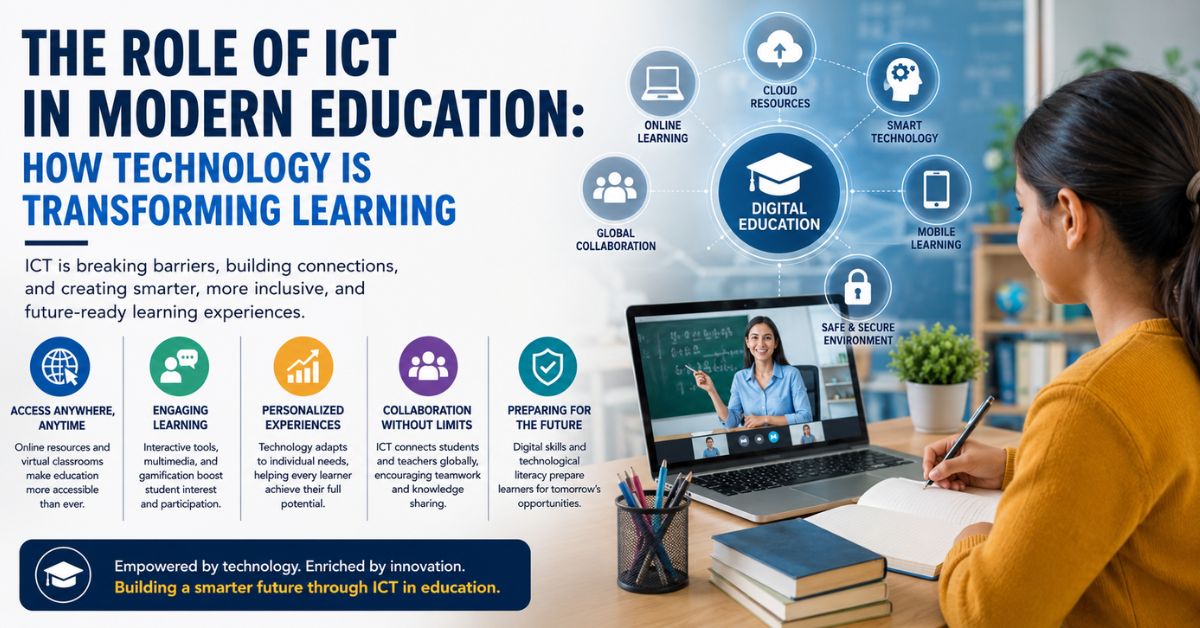
The classroom is no longer confined to four walls.
Students can now learn from anywhere, collaborate globally, and access knowledge with a single click.
ICT is not just changing education—it is redefining how learning happens.
Introduction
Education has experienced one of the most significant transformations in human history. Advances in Information and Communication Technology (ICT) have revolutionized how knowledge is delivered, accessed, shared, and applied. What once required physical classrooms, printed textbooks, and face-to-face instruction can now be accomplished through digital platforms, virtual classrooms, and interactive learning tools.
Technology has become an essential component of modern education. Schools, colleges, universities, and training institutions across the world are integrating ICT into teaching and learning processes to improve educational outcomes and prepare students for a digital future.
From online learning platforms and educational apps to artificial intelligence and virtual reality, ICT is creating new opportunities for students and educators alike. It is making education more accessible, engaging, personalized, and efficient.
This article explores the role of ICT in modern education, its benefits, challenges, applications, and how technology is transforming learning in the 21st century.
What is ICT in Education?
Information and Communication Technology (ICT) in education refers to the use of digital technologies to support teaching, learning, communication, administration, and educational management.
ICT tools commonly used in education include:
- Computers and laptops
- Smartphones and tablets
- Interactive whiteboards
- Learning Management Systems (LMS)
- Educational software
- Cloud-based platforms
- Video conferencing tools
- Online learning platforms
- Artificial intelligence applications
- Virtual and augmented reality technologies
These technologies help educators deliver lessons more effectively while enabling students to access learning materials anytime and anywhere.
Why ICT Matters in Modern Education
The world is becoming increasingly digital.
Today’s students are growing up in a technology-driven environment where digital literacy is just as important as traditional literacy. Educational institutions must adapt to these changes to prepare learners for future careers and life in a technology-based society.
ICT matters because it:
- Expands access to education
- Enhances learning experiences
- Encourages collaboration
- Supports personalized learning
- Develops digital skills
- Improves educational management
- Bridges geographical barriers
Technology is helping create more inclusive and flexible learning environments.
The Evolution of Technology in Education
Traditional Learning Methods
For centuries, education relied primarily on:
- Chalkboards
- Printed textbooks
- Face-to-face lectures
- Paper-based assignments
While effective in many ways, traditional methods often limited access to information and learning opportunities.
The Digital Shift
The introduction of computers and internet connectivity marked the beginning of educational transformation.
Schools started using:
- Computer labs
- Educational software
- Digital presentations
- Online research tools
These innovations expanded learning beyond physical classrooms.
Related post: 5G Technology: How It Will Revolutionize Communication and Connectivity
The Rise of Online Learning
The growth of the internet accelerated digital education.
Students gained access to:
- Online courses
- Virtual classrooms
- Digital libraries
- Educational videos
- E-learning platforms
Learning became more flexible and accessible than ever before.
Benefits of ICT in Education
Improved Access to Learning
One of the most significant benefits of ICT is increased access to education.
Students can access educational resources regardless of location.
This is particularly beneficial for:
- Rural communities
- Distance learners
- Working professionals
- Individuals with disabilities
Technology helps remove barriers that traditionally limited educational opportunities.
Enhanced Student Engagement
Interactive technologies make learning more engaging.
Students can participate through:
- Educational games
- Interactive quizzes
- Multimedia presentations
- Virtual simulations
These tools increase motivation and improve knowledge retention.
Personalized Learning Experiences
Every student learns differently.
ICT allows educators to tailor learning experiences based on individual needs and learning styles.
Personalized learning can include:
- Adaptive learning platforms
- Customized assignments
- Self-paced courses
- Individual progress tracking
Students receive support that matches their unique abilities and goals.
Better Collaboration
Technology enables students and teachers to collaborate regardless of location.
Collaboration tools include:
- Video conferencing
- Discussion forums
- Shared documents
- Online project management platforms
These tools encourage teamwork and communication skills.
Instant Access to Information
The internet provides access to vast amounts of information.
Students can quickly find:
- Research articles
- Academic journals
- Educational videos
- Online textbooks
- Learning tutorials
Access to information encourages independent learning and critical thinking.
Increased Flexibility
ICT supports learning anytime and anywhere.
Students can:
- Attend virtual classes
- Review recorded lessons
- Complete assignments online
- Learn at their own pace
Flexibility helps accommodate different schedules and learning preferences.
ICT Tools Transforming Education
Learning Management Systems (LMS)
Learning Management Systems have become central to modern education.
Popular LMS platforms allow educators to:
- Share course materials
- Manage assignments
- Track student progress
- Conduct assessments
These systems streamline educational administration and improve communication.
Virtual Classrooms
Virtual classrooms replicate traditional learning environments online.
Features include:
- Live video lessons
- Screen sharing
- Interactive discussions
- Real-time collaboration
Virtual learning became especially important during global disruptions and continues to grow in popularity.
Educational Applications
Mobile apps provide students with convenient access to learning resources.
Educational apps support:
- Language learning
- Mathematics practice
- Science simulations
- Reading development
These tools encourage continuous learning beyond the classroom.
Digital Libraries
Digital libraries provide instant access to academic resources.
Benefits include:
- Extensive collections
- Easy search functionality
- Remote accessibility
- Reduced costs
Students can access quality information without visiting physical libraries.
Interactive Whiteboards
Interactive whiteboards enhance classroom engagement.
Teachers can:
- Display multimedia content
- Annotate lessons
- Conduct interactive activities
These tools create dynamic learning experiences.
Artificial Intelligence in Education
Personalized Learning Through AI
Artificial intelligence is transforming education by analyzing student performance and adapting content accordingly.
AI-powered systems can:
- Identify learning gaps
- Recommend resources
- Adjust difficulty levels
- Provide personalized feedback
Students receive targeted support that improves learning outcomes.
Intelligent Tutoring Systems
AI tutors provide immediate assistance and guidance.
These systems help students:
- Solve problems
- Understand concepts
- Practice skills independently
They supplement classroom instruction and promote self-directed learning.
Automated Assessment
AI can automate grading and assessment processes.
Benefits include:
- Faster feedback
- Reduced teacher workload
- Consistent evaluation
Educators can spend more time supporting student learning.
Virtual Reality and Augmented Reality in Learning
Immersive Learning Experiences
Virtual Reality (VR) creates realistic simulations that allow students to explore environments and concepts interactively.
Examples include:
- Virtual science laboratories
- Historical site tours
- Medical training simulations
Immersive experiences improve understanding and engagement.
Enhanced Practical Learning
Students can practice skills in safe virtual environments before applying them in real-world situations.
This is particularly valuable in fields such as:
- Medicine
- Engineering
- Aviation
- Technical training
Increased Retention
Interactive experiences often improve memory retention compared to traditional teaching methods.
Students learn by doing rather than simply observing.
ICT and Distance Education
Expanding Educational Opportunities
Distance education has grown significantly because of ICT.
Students can enroll in courses from institutions around the world without relocating.
This creates opportunities for:
- Lifelong learning
- Professional development
- Higher education access
Flexible Learning Schedules
Online learning allows students to study according to their availability.
This flexibility benefits:
- Working professionals
- Parents
- Adult learners
Learning becomes more accessible to diverse populations.
Global Learning Communities
Students can interact with peers and educators from different countries and cultures.
Global collaboration promotes:
- Cultural awareness
- International perspectives
- Communication skills
ICT’s Impact on Teachers
Improved Lesson Delivery
Teachers can enhance lessons through:
- Videos
- Animations
- Interactive presentations
- Online resources
Technology helps explain complex concepts more effectively.
Efficient Administrative Tasks
ICT automates many administrative responsibilities such as:
- Attendance tracking
- Grading
- Report generation
- Communication with parents
This allows teachers to focus more on instruction.
Continuous Professional Development
Educators can access online training and professional development resources.
This helps teachers stay updated with:
- Teaching strategies
- Subject knowledge
- Educational technologies
ICT and Inclusive Education
Supporting Students with Disabilities
Technology promotes inclusion by providing tools that support diverse learning needs.
Examples include:
- Screen readers
- Speech recognition software
- Text-to-speech applications
- Assistive communication devices
These tools help ensure equal access to education.
Bridging Geographic Barriers
Students in remote areas can access quality educational resources through digital platforms.
ICT helps reduce educational inequalities caused by location.
Challenges of ICT in Education
Despite its benefits, ICT implementation presents challenges.
Digital Divide
Not all students have equal access to:
- Internet connectivity
- Devices
- Digital resources
This gap can create educational inequalities.
Cybersecurity and Privacy Concerns
Educational institutions must protect:
- Student data
- Academic records
- Online learning platforms
Strong cybersecurity measures are essential.
Teacher Training Requirements
Successful technology integration requires educators to develop digital competencies.
Ongoing training is necessary.
Technology Dependence
Excessive reliance on technology may reduce face-to-face interaction and critical thinking if not balanced properly.
Educational institutions should combine digital tools with effective teaching practices.
The Future of ICT in Education
The future of education will be increasingly technology-driven.
Emerging trends include:
Artificial Intelligence Expansion
AI will continue improving personalized learning and educational analytics.
Smart Classrooms
Connected devices and intelligent systems will create highly interactive learning environments.
Gamification
Game-based learning will become more common, increasing engagement and motivation.
Blockchain in Education
Blockchain technology may improve credential verification and academic record management.
Advanced Virtual Learning
Virtual and augmented reality technologies will become more accessible and widely adopted.
These innovations will further transform how education is delivered and experienced.
Best Practices for Effective ICT Integration
Educational institutions should:
Develop Clear Technology Strategies
Align technology investments with learning objectives.
Invest in Teacher Training
Ensure educators can effectively use digital tools.
Prioritize Accessibility
Provide equal access to technology for all learners.
Strengthen Cybersecurity
Protect educational data and digital infrastructure.
Focus on Learning Outcomes
Technology should support educational goals rather than replace effective teaching.
Conclusion
ICT has become one of the most powerful forces shaping modern education. By improving access, enhancing engagement, supporting personalized learning, and enabling global collaboration, technology is transforming how knowledge is delivered and acquired.
From virtual classrooms and AI-powered learning platforms to immersive virtual reality experiences, ICT is creating opportunities that were unimaginable just a few decades ago. While challenges such as digital inequality and cybersecurity concerns remain, the benefits of technology in education continue to outweigh the obstacles.
As educational institutions embrace innovation and adapt to changing learner needs, ICT will play an even greater role in preparing students for success in an increasingly digital world. The future of learning is not simply digital—it is interactive, personalized, accessible, and connected.
Frequently Asked Questions (FAQs)
What is ICT in education?
ICT in education refers to the use of digital technologies such as computers, software, internet platforms, and communication tools to support teaching and learning.
Why is ICT important in modern education?
ICT improves access to information, enhances student engagement, supports personalized learning, and prepares students for the digital economy.
How does technology improve learning?
Technology provides interactive resources, instant access to information, personalized instruction, and flexible learning opportunities.
What are examples of ICT tools used in education?
Examples include Learning Management Systems, virtual classrooms, educational apps, interactive whiteboards, digital libraries, and AI-powered learning platforms.
What are the benefits of online learning?
Online learning offers flexibility, accessibility, convenience, self-paced study, and access to global educational resources.
How does AI help in education?
AI supports personalized learning, intelligent tutoring, automated grading, and data-driven insights into student performance.
What challenges does ICT face in education?
Common challenges include limited access to technology, cybersecurity risks, insufficient teacher training, and the digital divide.
How does ICT support inclusive education?
ICT provides assistive technologies that help students with disabilities access educational content and participate fully in learning.
What is the future of ICT in education?
The future includes expanded AI applications, smart classrooms, immersive virtual learning, gamification, and blockchain-based academic systems.
Can ICT replace teachers?
No. ICT is a tool that enhances teaching and learning, but teachers remain essential for guidance, mentorship, critical thinking development, and student support.